Open Letter to Prime Minister Luxon regarding the government’s review of New Zealand’s biogenic methane target
Dear Prime Minister Luxon,
We, the undersigned, are writing to warn against adopting a new biogenic methane target based on the goal of achieving “no additional warming”, as set out in the Methane Science and Target Review Terms of Reference prepared by the New Zealand Government in June 2024.
Methane has roughly 80 times the heating effect of carbon dioxide over a 20-year period and an atmospheric life of around 12 years compared to hundreds of years for carbon dioxide. Because of these properties, the Intergovernmental Panel on Climate Change (IPCC) Sixth Assessment report concludes that swift reductions in methane pollution are a key component of actions to limit warming in line with the long-term temperature goal of the Paris agreement, which aims to avoid potentially catastrophic tipping points.
Adopting targets consistent with “no additional warming” ignores this scientific evidence. It redefines the goal of climate action as simply stabilising the warming impact of emissions from any given source at current levels – rather than seeking to “minimise all greenhouse gas emissions”.and their contribution to global warming.
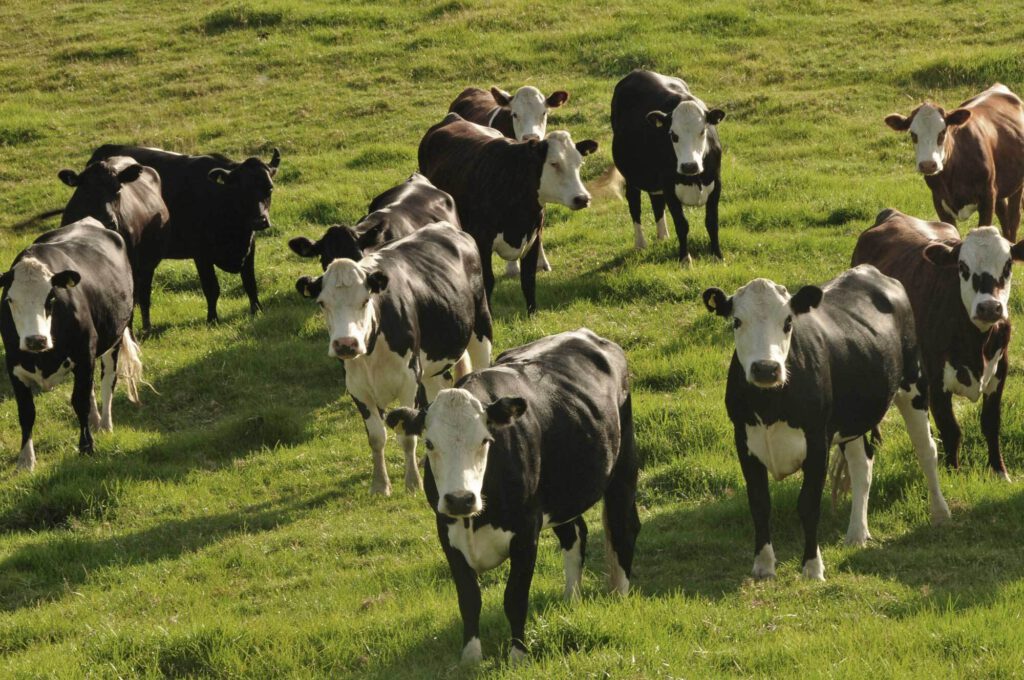
In short, “no additional warming” creates the expectation that current high levels of methane emissions are allowed to continue. That it is acceptable to ignore emissions responsible for 30% of the current level of global warming. Concentrations of methane in the atmosphere are currently around 2.5 times greater than pre-industrial levels and rising rapidly.
This move could jeopardise New Zealand’s commitments under the Paris Agreement given nearly half of New Zealand’s greenhouse gas emissions come from agriculture – primarily the livestock sector.
Specifically, it is inconsistent with commitments under Article 4 of the Paris Agreement on equity and the responsibility of developed nations, including that their Nationally Determined Contributions should reflect their highest possible ambition. As highlighted by the Parliamentary Commissioner for the Environment: “the sustained contribution to atmospheric warming that New Zealand makes through the emission of agricultural methane is a matter of choice, and choosing to maintain this warming at the current level is to claim a “right” to a certain level of warming from agriculture indefinitely.”
The aim of “no additional warming” is also difficult to reconcile with New Zealand’s commitment under the Global Methane Pledge, which calls for rapid global emission reductions of 30% by 2030. If New Zealand establishes a principle that its methane emissions need to reduce only by a few percent, who should deliver these cuts?
We call on the government to follow the guidance of its independent Climate Change Commission and deliver methane reductions that contribute to the goal of limiting global warming to 1.5 degrees, consistent with the purpose set out in New Zealand’s national climate change legislation.
Adopting targets consistent with “no additional warming” ignores the scientific advice. It implies that current methane emissions levels are acceptable. They are not.
Yours sincerely,
- Drew Shindell
- Professor of Climate Science at Duke University and Chair of the landmark 2021 UNEP Global Methane Assessment (US)
- Martin Manning
- Founding Director of the New Zealand Climate Change Research Institute at Victoria University of Wellington (New Zealand)
- Joeri Rogelj
- Professor of Climate Science & Policy at the Centre for Environmental Policy, Imperial College London (UK)
- Robert Howarth
- Professor of Ecology and Environmental Biology, Cornell University (US)
- Simon Redfern
- Professor, Department of Earth Sciences, University of Cambridge (UK)
- Mercede Bustamante
- Professor at the University of Brasilia and Member of the Brazilian Academy of Sciences (Brazil)
- Paul Behrens
- British Academy Global Professor, Environmental Change, University of Oxford (UK)
- James Renwick
- Professor of Physical Geography, Victoria University of Wellington-Te Herenga Waka (New Zealand)
- Matthew Hayek
- Assistant Professor in the Department of Environmental Studies, New York University (US)
- Martin Persson
- Professor in Land-use Science, Physical Resource Theory, Department of Space, Earth & Environment, Chalmers University of Technology (Sweden)
- Dave Reay
- Professor of Carbon Management & Education, School of Geosciences, University of Edinburgh & Co-Chair of the Just Transition Commission (UK)
- Pete Smith
- Professor of Soils & Global Change, Institute of Biological and Environmental Sciences, University of Aberdeen (UK)
- Colm Duffy
- Research Fellow in the School of Natural Sciences, University of Galway (Ireland)
- Lena Höglund-Isaksson
- Senior Research Scholar, Energy, Climate and Environment Program, International Institute for Applied Systems Analysis (Austria)
- David Styles
- Associate Professor in Agri-Sustainability, University of Galway (Ireland)
- Donal Murphy-Bokern
- Agricultural Scientist (Germany)
- Rosemary Green
- Professor of Environment, Food and Health & Co-Director of the Centre on Climate Change and Planetary Health, London School of Hygiene and Tropical Medicine (UK)
- Ian Mason
- Adjunct Senior Fellow in Renewable Energy Systems Engineering, University of Canterbury (New Zealand)
- Aditi Mukherji
- Co-ordinating lead author for IPCC AR6 and lead author of Breakthrough Agriculture report
- Zebedee Nicholls
- Research Scholar, Integrated Climate Impacts Research Group – Energy, Climate and Environment Program, International Institute for Applied Systems Analysis (Austria)
- Hannah Daly
- Professor in Sustainable Energy Systems, University College Cork (Ireland)
- Barry McMullin
- Professor (Emeritus), School of Electronic Engineering, Dublin City University (Ireland)
- Carl-Friedrich Schleussner
- Professor at Humboldt University of Berlin (Germany)
- Mike Berners-Lee
- Professor in Practice, Lancaster Environment Centre, Lancaster University (UK)
- Paul R. Price
- Adjunct Professor, Dublin City University (Ireland)
- Chris Malley
- Senior Research Fellow, Stockholm Environment Institute, University of York (UK)
About Us
We are a group of independent scientists from across the globe who are concerned that plans to introduce a new biogenic methane target based on the goal of “no additional warming” will jeopardise New Zealand’s commitments under the Paris Agreement and the Global Methane Pledge.